Thanksgiving is the one meal of the year built around abundance. That’s the whole point, and it’s also why the morning after usually looks the same: overflowing trash bags, a fridge stuffed with containers nobody labeled, and a stack of plastic forks headed to the landfill.
It doesn’t have to end that way. Whether you’re hosting the whole family on Thanksgiving Day or throwing a Friendsgiving for your crew, a few decisions made now can cut the waste without cutting any of the fun. Here’s a step-by-step plan, from the guest list to the last bag of compost.
What Makes a Thanksgiving Zero-Waste?
Let’s be realistic: almost no holiday meal produces literally zero trash. A zero-waste Thanksgiving is about getting close. The goal is simple: everything that comes to the table either gets eaten, gets reused, or gets composted. Very little should end up in the landfill bag.
That comes down to three decisions: how much food you make, what you serve it on, and how you handle what’s left.
Step 1: Plan the Menu Around Your Real Guest Count
Most holiday food waste starts in the grocery cart. Before you shop, lock in your RSVPs and plan portions around actual people, not a vague sense of “plenty.” Tools like Save The Food can help you estimate how much to make.
A few habits that help:
- Make fewer dishes and make them well. Five sides everyone loves beat nine sides that half the table skips.
- Shop with a list, and check the pantry first so you don’t buy a third can of pumpkin.
- Buy loose produce instead of plastic-wrapped packs when you can, and bring your own bags.
- For Friendsgiving, assign dishes in a shared list so you don’t end up with four green bean casseroles and no rolls.
Step 2: Set a Table That Composts
Real dishes are the lowest-waste option if you have enough of them and someone willing to wash them all. For bigger gatherings, though, disposables are a practical reality. The trick is choosing disposables that don’t become trash.
Skip plastic cutlery, foam plates, and glossy paper plates. Many paper plates carry a plastic or wax coating that keeps them out of the compost bin. Instead, set the table with plant-based pieces that break down after the meal:
- Bamboo plates that hold up to a full plate of turkey, stuffing, and gravy without bending or going soggy.
- Bamboo cutlery that stays rigid through dense, hot food and composts at home.
- Bamboo entertaining napkins that feel right on a holiday table and go into the compost with the scraps.
Bamboo also looks the part. Its natural wood tone fits a fall table far better than bright white plastic. If you’re weighing materials, our bamboo vs. bagasse comparison breaks down how the two hold up.
Step 3: Cut the Single-Use Extras
Plates and forks are the obvious waste. The sneaky waste is everything around them.
- Serve drinks from pitchers, carafes, or a self-serve drink station instead of individual bottles and cans.
- Decorate with things that have a second life: pumpkins, squash, and apples you’ll cook later, plus branches and leaves that go straight into the compost.
- Skip balloons, confetti, and plastic tablecloths. A cloth runner or kraft paper down the table works year after year.
- Keep a roll of reusable bamboo paper towels in the kitchen for spills instead of burning through disposable rolls.
Step 4: Make Leftovers Part of the Plan
Leftovers are the best part of Thanksgiving, so treat them like a course, not an afterthought.
Ask guests to bring a container or two, or set out a takeaway station with jars and reusable containers so everyone heads home with a plate. Get food into the fridge promptly; USDA’s leftovers guidance covers how long food can safely sit out and how long it keeps.
Then plan a second round. Turkey bones become stock, extra mashed potatoes become potato cakes, and stale rolls become next year’s stuffing practice. For more ideas, the EPA has practical tips for wasting less food at home.
Step 5: Set Up a Cleanup Station
Even well-meaning guests toss everything in the nearest bin. Make the right choice the easy one.
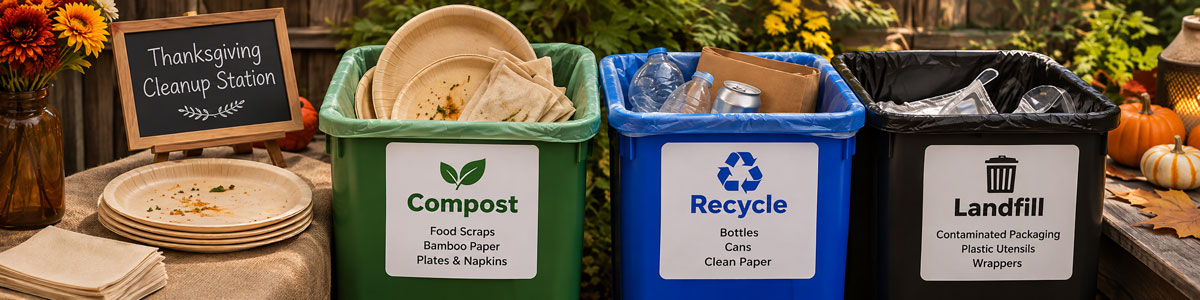
Set up three clearly labeled bins: Compost, Recycle, and Landfill. Put the compost bin first and make it the biggest, since that’s where plates, napkins, cutlery, and food scraps belong when your table is set with bamboo. Mention it once when people sit down, and your guests will handle the rest.
After the party, add everything to your backyard bin if you’re composting at home, or set it out for your city’s food scrap pickup if you have one. Our explainer on bamboo compostability covers how long each product takes to break down.
Friendsgiving Twists That Cut Waste Further
Friendsgiving is usually more casual, which makes it easier to try new habits.
- Make it a true potluck and ask everyone to bring their dish in a container they’ll take home.
- Rotate hosting so the cleanup load, and the compost, gets shared.
- Swap a gift for the host with a shared contribution, like covering the compostable tableware for the group.
- Hosting an office Friendsgiving? Wholesale bamboo products make it easy to stock compostable plates, cutlery, and napkins for a crowd.
Your Zero-Waste Hosting Checklist
- Confirm RSVPs and plan portions per guest.
- Shop from a list with reusable bags.
- Set the table with compostable bamboo plates, cutlery, and napkins.
- Serve drinks from pitchers, not single bottles.
- Decorate with produce and natural pieces you’ll cook or compost.
- Set out takeaway containers for leftovers.
- Label three bins and put compost first.
Frequently Asked Questions
How do you have a zero-waste Thanksgiving?
Plan portions around your actual guest count, serve on compostable tableware like bamboo plates and cutlery, skip single-use extras, send leftovers home with guests, and set up labeled bins so plates, napkins, and food scraps go into compost instead of the trash.
Are bamboo plates compostable?
Yes. Uncoated bamboo plates are plant fiber and break down in home and commercial compost. Breaking them into smaller pieces speeds up the process.
Can paper plates be composted?
Only if they’re plain and uncoated. Many paper plates have a plastic or wax coating that keeps them from breaking down properly, so check the packaging or choose uncoated bamboo plates instead.
How do you host an eco-friendly Friendsgiving?
Coordinate dishes in a shared list to avoid duplicates, ask guests to bring reusable containers, use compostable bamboo tableware, serve drinks from pitchers, and set up a clearly labeled compost bin for cleanup.
What should I do with Thanksgiving leftovers?
Refrigerate them promptly, send portions home with guests, and turn extras into new meals, such as turkey bone stock, soups, or potato cakes. Compost the scraps that can’t be eaten.
Set a Table You Can Feel Good About
The best Thanksgiving memories come from the food and the people, not the trash bags. Give your guests a table that looks warm and natural, then lets you clean up with a compost bin instead of a landfill run.
Stock up on Jenvita’s bamboo plates, cutlery, and entertaining napkins for your Thanksgiving or Friendsgiving table, all shipped plastic-free.