Walk down any pharmacy aisle and you’ll find dozens of cotton swab options, but almost none of them were designed with children in mind. That’s a real gap, because kids’ ears are smaller, their skin is more delicate, and their wiggling is legendary. A swab that’s perfectly manageable on an adult can do damage in a squirming toddler’s ear.
Child-safe cotton swabs exist to close that gap. This guide explains what actually makes a swab child-safe, what pediatricians want you to know about kids’ ears, and how to pick a swab that protects both your child and the planet.
What Makes a Cotton Swab “Child-Safe”?
The defining feature of a child safety swab is the tip. Instead of the narrow bullet shape of a standard swab, a child-safe swab has a wider, rounded tip that acts as a built-in stopper. The design physically prevents the swab from going too far into the ear canal, which is where nearly all swab-related injuries happen.
Think of it like the guard on a vegetable peeler. The tool still does its job, but the design itself limits how much harm a slip can cause. With Jenvita’s bamboo child safety swabs, that guard shape is paired with a sturdy bamboo stick and a soft 100% cotton tip, so you get gentle cleaning power with a physical limit on depth.
A quality child-safe swab should offer:
- A wide safety tip that cannot enter the ear canal
- Tightly wound cotton that won’t shed fibers or pull loose
- A rigid stick that won’t snap mid-use, since broken sticks cause injuries of their own
- No dyes, fragrances, or chemical treatments on materials that touch delicate skin
What Pediatricians Say About Kids’ Ears
Before we go further, the medical context matters. Pediatric experts warn against inserting any cotton swab into a child’s ear canal, and studies of emergency room data have found that cotton swab injuries send roughly 12,500 children to US emergency rooms each year, about 34 kids a day. The most common injuries are foreign objects in the ear, perforated eardrums, and soft tissue damage.
There’s a second reason to leave the canal alone: earwax is protective. It moisturizes the ear canal and traps dust, dirt, and germs before they reach the eardrum. Pushing a swab into the canal tends to pack wax deeper, which can cause blockages, discomfort, and even hearing trouble.
So what are swabs actually for? Plenty. The outer ear still collects wax, water, and grime, and swabs remain great for cleaning the visible folds of the ear, along with dozens of non-ear jobs: cleaning belly buttons, applying ointment to scrapes, arts and crafts, and detail cleaning around the house. A child-safe tip means those everyday tasks come with a wide margin for error. If your child has ear pain, unusual discharge, or seems to have trouble hearing, skip the home remedies and see your pediatrician.
Why Material Matters: Bamboo vs. Plastic for Baby Swabs
Once you’ve settled on a safety-tip design, the next question is what the swab is made of. This choice affects both safety and sustainability.
The Stick
Plastic swab sticks are thin, and thin plastic can snap under pressure, leaving sharp edges near a child’s face. Bamboo has a natural strength that holds up without snapping, and its slight flex gives you feedback before anything breaks. Paper sticks avoid plastic but often bend and buckle mid-task.
The Chemicals
Children’s skin absorbs more of what touches it than adult skin does. Quality bamboo swabs are made without dyes, inks, or chemical treatments, while some plastic swabs include colorants in the stick. Fewer additives means fewer question marks.
The Afterlife
Families go through swabs quickly, and every plastic swab tossed in the trash persists for centuries, breaking into microplastics along the way. A bamboo and cotton swab is fully plant-based, so it decomposes completely. You can compost used swabs at home; our beginner’s guide to composting covers how. For the full material comparison, see our post on bamboo cotton swabs vs. plastic.
One disposal rule for every household: never flush swabs of any kind. They clog plumbing and can slip through wastewater treatment into rivers and oceans.
How to Use Child-Safe Swabs the Right Way
Even with a safety tip, technique matters. Pediatric guidance is consistent on the basics:
- Stay outside the canal. Clean only the visible parts of the outer ear: the folds, the ridge, and behind the ear.
- Go gently. A light touch lifts away wax and water. Scrubbing irritates skin.
- Keep swabs out of little hands. Toddlers imitate what they see. Store swabs out of reach and make ear cleaning a parent-only job.
- Let baths do most of the work. Warm water during a regular bath loosens and clears most wax naturally. A damp washcloth or a swab afterward handles the rest.
- Know when to call the doctor. Pain, discharge, odor, or hearing changes are signals for a pediatrician visit, not a deeper clean.
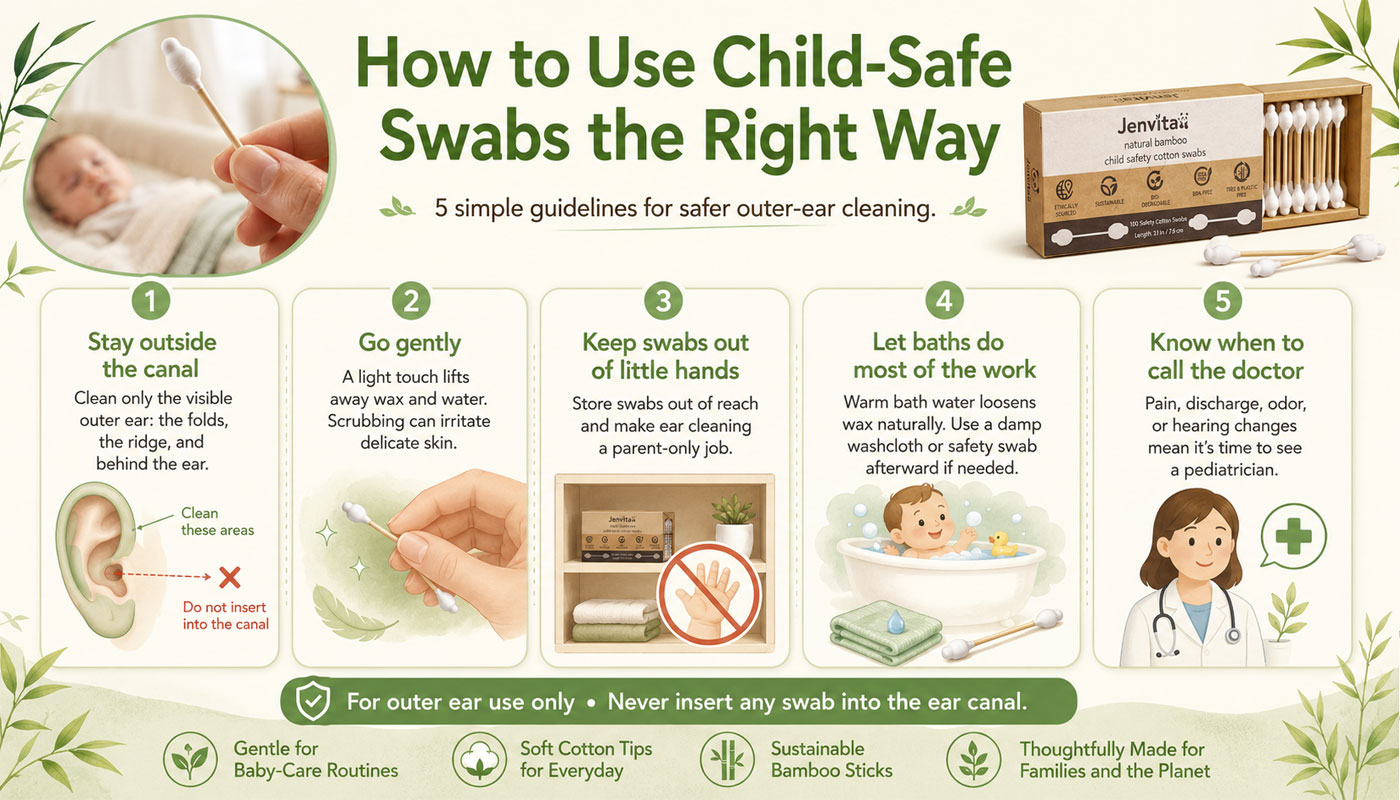
Feel free to share the infographic with friends and family!
What to Look For Before You Buy: A Checklist
Use this quick checklist when comparing child-safe swabs:
- Wide, rounded safety tip on at least one end
- 100% cotton tips, tightly wound
- Bamboo stick rather than plastic
- No dyes, fragrances, or coatings
- Plastic-free, recyclable packaging
- Compostable after use
- Enough count per pack to match how fast your family actually uses them
Jenvita’s bamboo child safety swabs check every box, with 200 swabs per pack, FSC-certified bamboo sticks, and recyclable cardboard packaging with no plastic window or wrap. They’re part of a full line of bamboo cotton swabs made under the same standards, and you can read about our sourcing on the sustainability page.
Frequently Asked Questions
Are cotton swabs safe for babies?
Standard cotton swabs should never go inside a baby’s ear canal. Swabs with a wide safety tip are designed for cleaning the outer ear only, and their shape physically prevents over-insertion. For most babies, a damp washcloth handles daily ear cleaning, with a safety swab useful for folds and creases.
What’s the difference between child safety swabs and regular swabs?
The tip shape. A child safety swab has a wider, rounded tip that acts as a stopper so the swab cannot enter the ear canal. Regular swabs have narrow tips that can reach, and injure, the eardrum.
How should I clean my child’s ears?
Pediatricians recommend cleaning only the outer ear. Warm water during baths loosens wax naturally, and a washcloth or safety-tip swab can wipe the visible folds afterward. If wax builds up inside the canal or your child has pain or hearing changes, see your pediatrician rather than digging at home.
Are bamboo baby swabs really compostable?
Yes. A bamboo stick with a cotton tip is entirely plant-based and breaks down in a home compost bin within months. Plastic swabs never fully decompose; they fragment into microplastics instead.
Why choose bamboo over paper stick swabs?
Both avoid plastic, but bamboo is noticeably sturdier. Paper sticks tend to bend and buckle mid-use, while bamboo keeps its shape, which matters most when you’re working around a wiggly child.
Choose Safer Swabs for Little Ears
A safer tip, a sturdier stick, and nothing artificial against your child’s skin. Child-safe bamboo swabs are one of those small upgrades that make everyday parenting a little less risky and a lot more sustainable.
Ready to stock the changing table? Explore Jenvita’s bamboo child safety swabs and classic bamboo cotton swabs, biodegradable, plastic-free, and delivered in recyclable packaging.
Shop Child Safety Swabs Shop Bamboo Cotton Swabs